FIELD NOTES / THE PRUNING GUIDE
Tree trimming.
A plan before
the pruning.
The questions to ask before you trim—and the reasons that should guide the work.
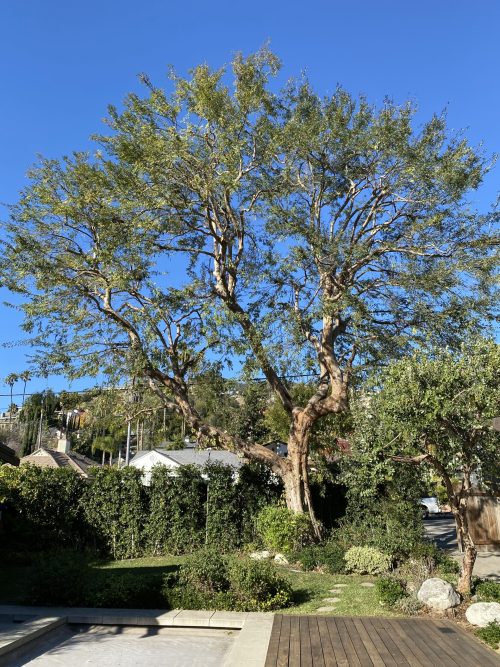
Good tree trimming starts with a clear purpose. We want to know what the tree needs, what surrounds it and what you want to improve before discussing the cuts.
For homeowners in the San Fernando Valley and Santa Clarita Valley, that conversation often starts with a branch over the roof, a crowded canopy or a walkway that needs more clearance. Those concerns deserve a tree-specific plan—not an automatic heavy cut every year.
Start with the reason for pruning
Walk your property from the ground and write down the issues you want us to assess. Are branches touching a structure? Is a limb damaged? Does the tree interfere with normal access? Are you hoping to preserve shade while improving the tree’s relationship with the house?
A useful work description identifies the tree and the objective. “Evaluate branches near the roof and recommend appropriate clearance” gives us a better starting point than “make it smaller.” Photos taken from a safe distance can help us understand the setting before an appointment.
Plan for the tree you have
Pruning timing and intensity depend on species, age, condition and the reason for the work. We do not recommend treating every tree in both valleys on the same calendar. A young tree’s structural needs can be very different from those of a mature shade tree.
We also discuss access, nearby planting, irrigation and the space available for the crew. Let us know about past pruning, recent construction or a change you have noticed in the canopy. That history helps make the site visit more useful.
Why topping is not a good shortcut
Reducing a tree to short stubs may look like a fast way to control its size, but topping can damage the tree and create future maintenance problems. The International Society of Arboriculture’s tree-owner guidance explains why each cut needs a reason and why topping should be avoided.
UC IPM’s pruning guidance also distinguishes appropriate thinning and selective pruning from harmful topping. Our goal in discussing a pruning scope is to address the actual concern while respecting the tree’s structure and natural form.
What to ask before approving an estimate
- Which trees and branches are included, and what is the purpose of the work?
- What access or parking does the crew need?
- How will nearby structures and landscape features be considered?
- Does the price include loading, hauling and the agreed cleanup?
- Is follow-up evaluation recommended for a particular tree?
Ask for the scope in writing so you can compare proposals on the same basis. The lowest number is difficult to evaluate when one estimate includes hauling and another leaves material on site.
Know when to call instead of approaching
If you see a hanging limb, a fresh split or a sudden change in a tree’s position, keep people and pets away and arrange an assessment. Stay clear of trees touching power lines and contact the utility. A routine trimming appointment is not a substitute for dealing with an immediate hazard.
Let’s plan the right work for your property
We provide tree trimming in the San Fernando and Santa Clarita valleys. Tell us what you have noticed, what you want to protect and how the property is used. We will start with those priorities.
A clear plan for your trees.
Contact Urgent Tree Care to discuss your trees and request an estimate.