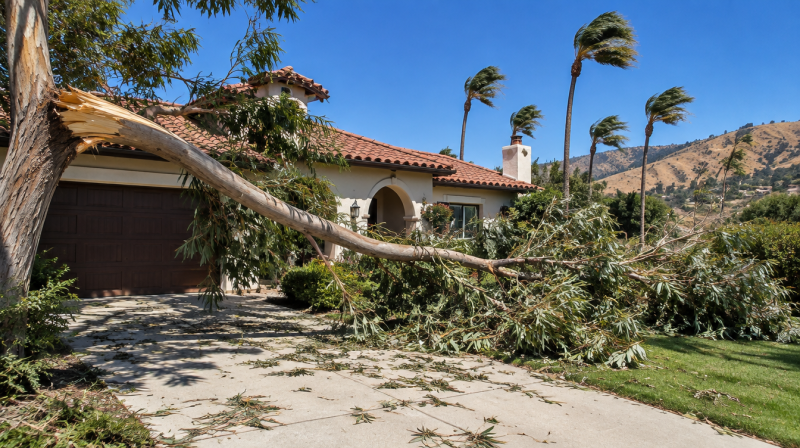
When the Santa Ana winds start blowing, every tree on your property gets a stress test. Emergency tree removal calls across Southern California rise sharply from October through March. Limbs weakened over a long, dry summer give way, and shallow-rooted trees tip over in loose soil. From the San Fernando Valley to the San Gabriel foothills, homeowners and property managers find out the hard way which trees were a problem.
The good news is that most tree emergencies give warning signs weeks or months ahead. This guide covers how to spot a high-risk tree before wind season, what to do if one falls, and when emergency tree removal is the right call. The advice applies across Los Angeles County, whether you live in Burbank, Glendale, Pasadena, Santa Clarita, or Woodland Hills. If you’re already facing a downed tree, skip ahead and request emergency service now.
Why Santa Ana Winds Are So Hard on Local Trees
Santa Ana winds blow hot and dry from the desert, often after months without meaningful rain. That combination causes trouble for trees in three ways:
- Dehydrated wood is brittle. Limbs that would flex in a winter storm snap instead.
- Wind direction is unusual. Most local trees grow to withstand onshore westerly breezes. Santa Anas push from the northeast and load trees from the side they are least braced against.
- Dry, loose soil holds roots poorly. Trees with shallow or damaged root systems can uproot entirely.
Wind season is when hidden defects become sudden failures. When a wind event is coming, the National Weather Service Los Angeles office posts wind advisories and high wind warnings for each part of the county. Checking it before a big blow gives you time to move cars and secure patio furniture away from at-risk trees.
Warning Signs a Tree May Fail This Season
Walk your property now, before the first wind advisory, and look for:
- Dead or hanging branches, sometimes called “widowmakers”
- Deep cracks or splits in the trunk or at major branch unions
- A new or worsening lean, especially with heaved or cracked soil at the base
- Mushrooms, fungal conks, or soft, crumbling wood near the roots
- Thinning canopy or early leaf drop on only one side of the tree
- Limbs hanging over your roof, driveway, pool, or power lines
If you see more than one of these on the same tree, have it assessed before the winds arrive. The International Society of Arboriculture’s consumer site, TreesAreGood.org, explains in more detail how to recognize tree hazards.
Trees That Commonly Fail in Los Angeles County
Some species show up on emergency calls more than others. Eucalyptus is known for dropping large limbs without warning. Tall palms shed heavy fronds and seed pods that turn into projectiles in high wind. Mature pines, Chinese elms, and ficus with large, heavy canopies can also fail, especially after years without proper trimming.
Our crews have handled palm, olive, and pine removals and Chinese elm trimming throughout the region; you can see examples on our emergency tree services homepage. The pattern repeats: canopies left untrimmed catch the most wind.
What to Do Immediately After a Tree Falls
If a tree or large limb comes down on your property, follow these steps in order:
- Get everyone to safety. Keep people and pets away from the tree and anything it touched.
- Assume any wire is live. Never approach a tree tangled in power lines. Call 911, then report the downed line to your utility: Southern California Edison or, inside the City of Los Angeles, the Los Angeles Department of Water and Power.
- Don’t try to cut it yourself. A fallen tree often has branches under tension that can spring back with dangerous force.
- Document the damage. Take photos and video from a safe distance before anything is moved. Your insurance company will need them. If you have questions about what your policy covers, the California Department of Insurance offers free consumer help.
- Call a professional for emergency tree removal. A trained crew can stabilize the situation, remove the hazard, and protect your home from further damage. Contact our emergency team or call (818) 919-4664.
Street Trees vs. Private Trees: Who Is Responsible?
Not every fallen tree is your responsibility. Trees in the parkway strip between the sidewalk and the street are often maintained by your city or the county. In the City of Los Angeles, you can report a street tree emergency through 311 or the StreetsLA Urban Forestry Division. Residents of unincorporated communities can contact Los Angeles County Public Works about fallen limbs or trees in the public right-of-way.
Trees on your side of the property line are generally yours to maintain. The same applies to trees on HOA common areas and commercial lots, which are the property owner’s or association’s responsibility.
How Preventive Trimming Reduces Wind Damage
The cheapest tree emergency is the one that never happens. Before wind season, proper trimming can:
- Remove dead, diseased, and crossing branches
- Thin dense canopies so wind passes through instead of pushing against the whole tree
- Lift limbs away from roofs, chimneys, and service lines
- Reduce weight on overextended branches
Timing matters. Scheduling a trim in September or early October gets you ahead of the rush that follows the first big wind event. Homeowners can learn more about our residential tree trimming and removal services.
Emergency Tree Removal vs. Scheduled Removal
A tree that is actively threatening your home, blocking access, or resting on a structure needs emergency tree removal, usually the same day. A tree that is dead or declining but stable can typically be scheduled. The work is still urgent, but it can be planned around permits, access, and cost. If you’re unsure which category you’re in, send us a description and photos through our service request form. An experienced technician can usually tell you quickly.
Protecting HOAs and Commercial Properties
For property managers and HOA boards, a fallen tree can also create liability exposure. A limb falling in a parking lot, walkway, or common area can injure residents or damage vehicles. A documented pre-season inspection and trimming schedule shows due diligence and cuts emergency calls dramatically. We work with associations and businesses through our HOA tree maintenance programs and commercial tree services.
Wind Season and Wildfire Readiness
Santa Ana winds are also fire weather. Dead branches, palm skirts, and dry debris near your home give embers something to catch. Clearing that material serves double duty: it reduces wind-failure risk and helps create defensible space.
CAL FIRE’s Ready for Wildfire site explains defensible space zones and home hardening step by step. The Los Angeles County Fire Department’s Ready, Set, Go! program covers local evacuation planning. For questions about long-term tree health, the International Society of Arboriculture is a trusted resource for finding certified arborists.
Trusted Local Network
A fallen tree is rarely the only problem a property owner faces after a windstorm. When a limb punctures a roof and rain follows, experienced water-damage restoration services can dry out and repair the interior before mold sets in. If your insurance claim becomes complicated or the settlement offer seems low, independent public insurance adjuster services can help you document losses and advocate for a fair outcome.
Your Los Angeles County Emergency Tree Specialists
For more than 25 years, Urgent Tree Care has responded to fallen trees, split trunks, and storm-damaged limbs across Los Angeles County. We serve homeowners, HOAs, and businesses from the San Fernando Valley to Pasadena, Glendale, Burbank, and Santa Clarita. Don’t wait for the first Santa Ana wind advisory to find out which of your trees is at risk. See what our customers say on Urgent Tree Care’s Google reviews, then request service now or call (818) 919-4664 for immediate help.